
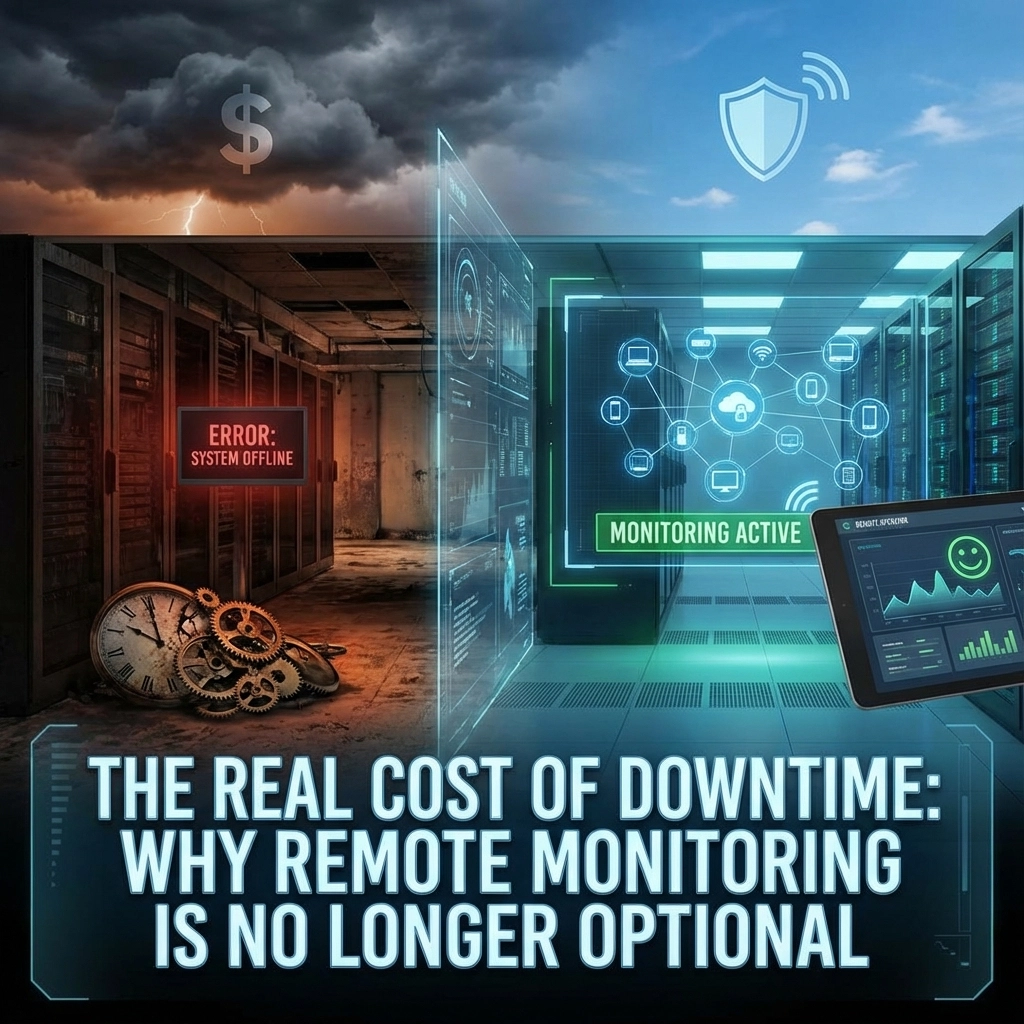
Picture this: It's Monday morning, your team arrives at the office, and nothing works. No emails, no access to customer databases, no payment systems. Your business has ground to a halt, and with every passing minute, money is literally draining from your accounts. Welcome to the reality of unplanned downtime: and why it's costing UK businesses far more than they realise.
In 2026, downtime isn't just an inconvenience; it's a business-critical threat that can make or break companies. The statistics are staggering: businesses lose between £100 to £8,000 per minute when their systems fail. But here's the kicker: most of these outages are entirely preventable with proper remote monitoring in place.
The Eye-Watering Financial Reality
Let's talk numbers, because they're more shocking than you might expect. Small businesses face costs of £100-£350 per minute when their systems go down. That might not sound catastrophic until you realise a typical outage lasts several hours. For a small firm with 25 employees and £8 million in annual revenue, even a single hour of downtime can cost upwards of £80,000.
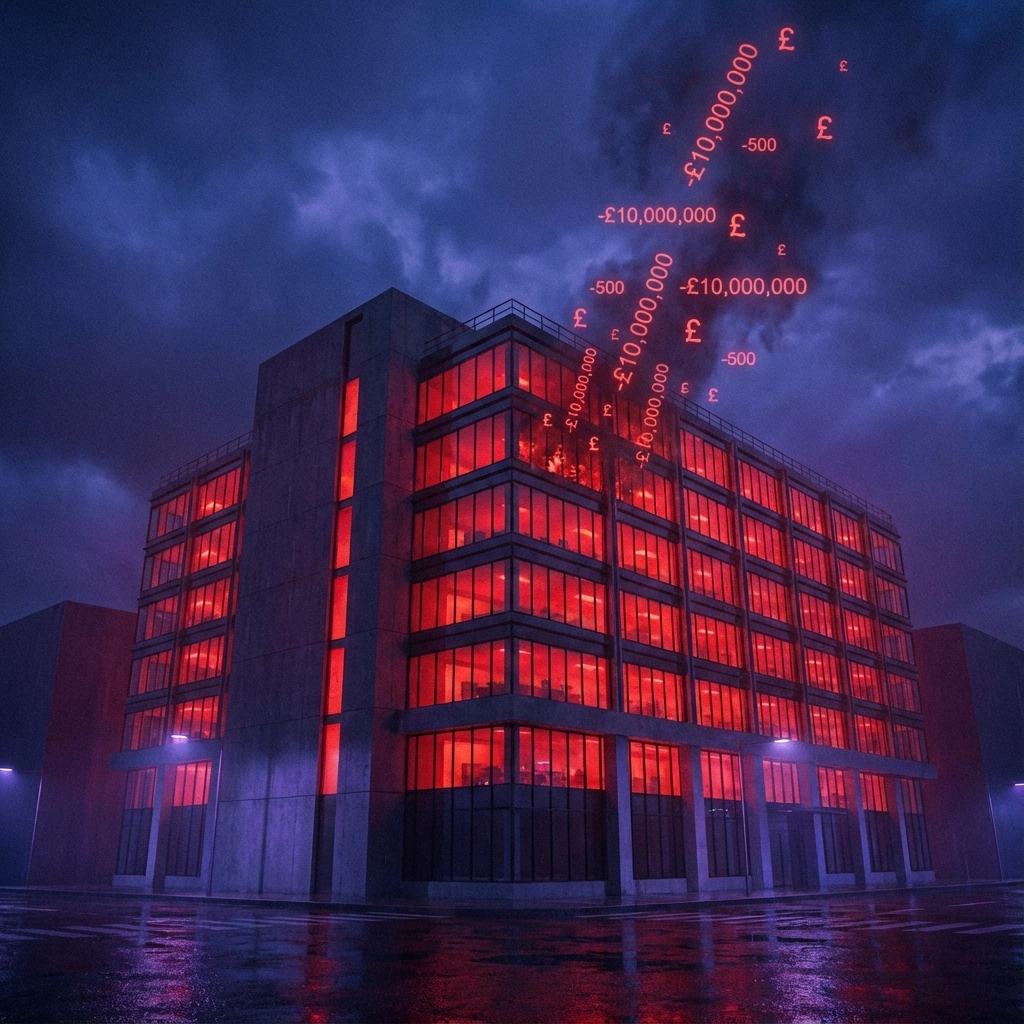
Mid-size companies fare even worse, with average losses exceeding £240,000 per hour. Over 90% of firms in this category report costs in this range, and that's just the immediate impact. Some mid-market companies with 500-1,000 employees estimate combined losses of £80,000-£240,000 per hour when factoring in lost productivity and missed sales opportunities.
Large enterprises face the most devastating impact, with losses reaching £800,000 to £4 million per hour. In worst-case scenarios involving critical data systems, costs can spiral into millions per minute. When you consider that major outages can last 6-12 hours or more, we're talking about losses that can threaten the viability of even well-established companies.
Industry-Specific Vulnerabilities
The pain isn't distributed equally across sectors. Different industries face varying levels of vulnerability, and understanding these differences is crucial for risk assessment.
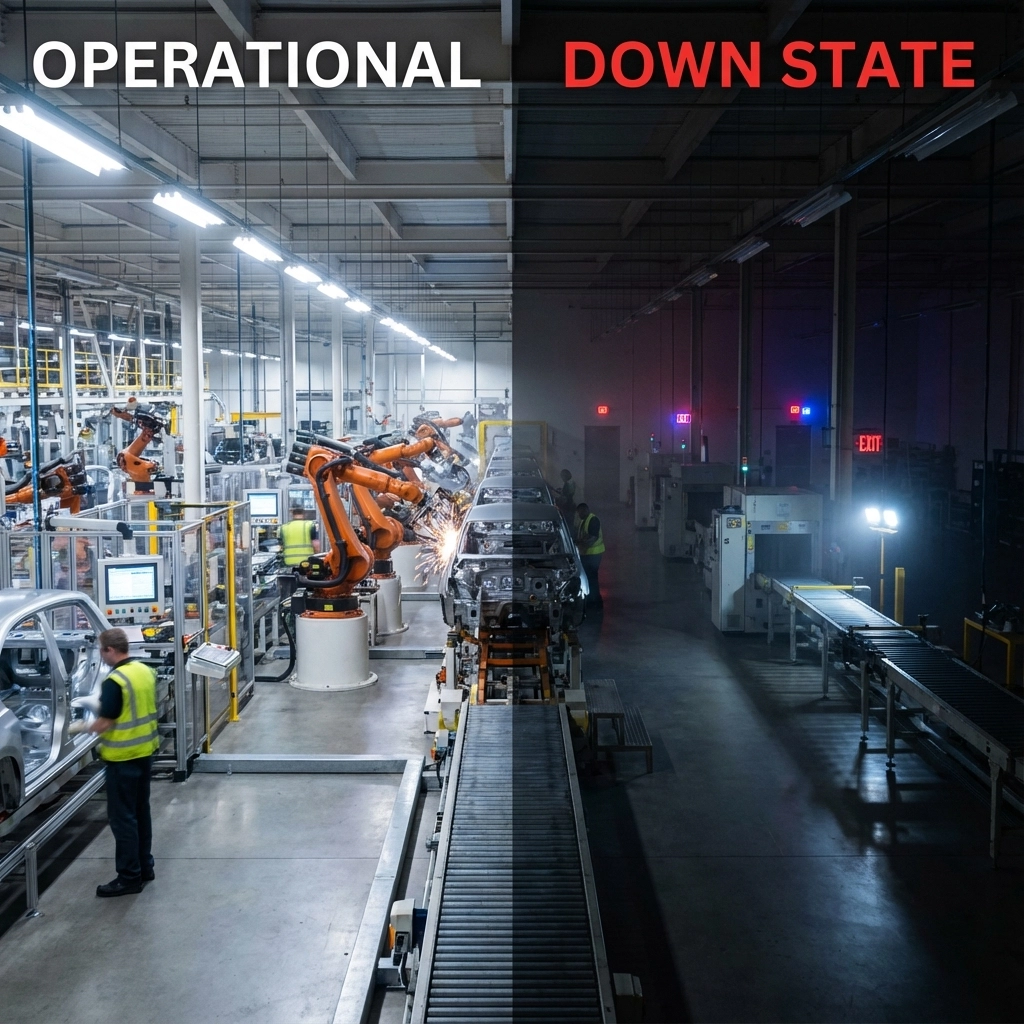
Automotive manufacturers top the charts with potential losses of £1.8 million per hour. When production lines halt, the ripple effects cascade through complex supply chains, affecting everything from supplier deliveries to customer shipments.
Finance and healthcare sectors face unique challenges, with potential losses reaching £4 million per hour. These industries don't just lose revenue: they face regulatory penalties and catastrophic erosion of customer trust. A payment processor going offline doesn't just lose transaction fees; it potentially violates PCI compliance requirements and faces hefty fines.
Retail e-commerce businesses can lose £800,000 to £1.6 million per hour during peak trading periods. Imagine an online retailer going down during Black Friday or the Christmas rush: the immediate sales loss is just the beginning. Customer acquisition costs skyrocket as disappointed shoppers migrate to competitors.
Manufacturing operations typically lose £400,000 to £800,000 per hour when systems fail. These aren't just IT failures: modern manufacturing relies heavily on automated systems, inventory management, and just-in-time delivery schedules. A single system failure can disrupt operations for days.
Even FMCG (Fast-Moving Consumer Goods) companies, traditionally less IT-dependent, face losses of £30,000 per hour. As these businesses digitise their operations and customer interactions, their vulnerability to downtime increases exponentially.
The Hidden Costs That Really Hurt
Here's where it gets truly painful: the direct financial losses are just the tip of the iceberg. Research from Splunk and Oxford Economics reveals that Global 2000 companies lose 9% of annual profits to downtime when including all indirect costs.
Employee productivity takes a massive hit. When systems are down, your team isn't just sitting idle: they're frantically trying to work around the problem, often creating more issues in the process. Customer service teams field angry calls they can't resolve, sales teams lose deals they can't close, and management teams make decisions without access to critical data.
Customer churn represents perhaps the most devastating long-term impact. Research indicates that 60% of enterprises experience customer attrition following a significant outage, and recovery can take months or years. For small businesses, this reputational damage can be permanent. Customers who lose trust in your reliability don't just leave: they actively discourage others from doing business with you.

The Siemens 2024 report found that unscheduled downtime consumes 11% of annual revenues across organisations. That's not profit: that's gross revenue simply evaporating due to preventable system failures.
Why Remote Monitoring Changes Everything
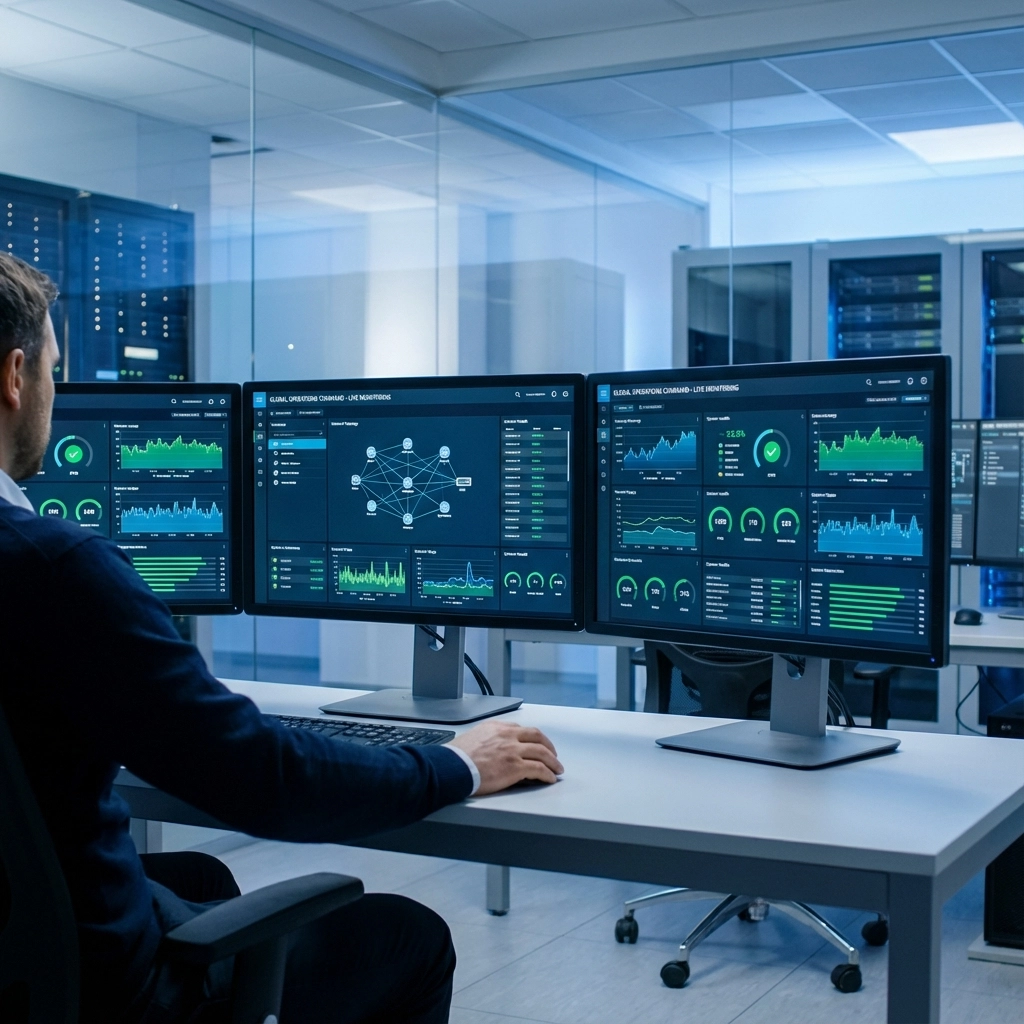
This is precisely why remote monitoring has evolved from a "nice-to-have" to an absolute business necessity. Think of it as your IT immune system: constantly watching, analysing, and responding to threats before they become disasters.
Modern remote monitoring doesn't just alert you when something breaks; it predicts failures before they happen. By continuously analysing system performance, network traffic, and hardware health, these systems can identify patterns that indicate impending failures. A server showing unusual temperature spikes, a network switch with increasing error rates, or a hard drive beginning to show bad sectors: all of these can be detected and addressed during planned maintenance windows rather than during critical business hours.
The technology has become remarkably sophisticated. AI-powered monitoring systems can establish baseline performance metrics for your entire infrastructure and immediately flag deviations. They can distinguish between normal operational variations and genuine problems, reducing false alerts while ensuring real issues receive immediate attention.
Technology Expense Management for Multinational Corporations
For multinational corporations, the stakes are even higher, and remote monitoring becomes part of a broader technology expense management strategy. These organisations often struggle with visibility across diverse geographic locations, varying time zones, and complex hybrid infrastructure spanning on-premises data centres, multiple cloud providers, and edge computing resources.
Effective remote monitoring for multinationals requires centralised oversight with local responsiveness. A system failure in your Manchester office shouldn't require technicians to fly in from London: but your IT leadership needs real-time visibility into the situation regardless of where they're based.
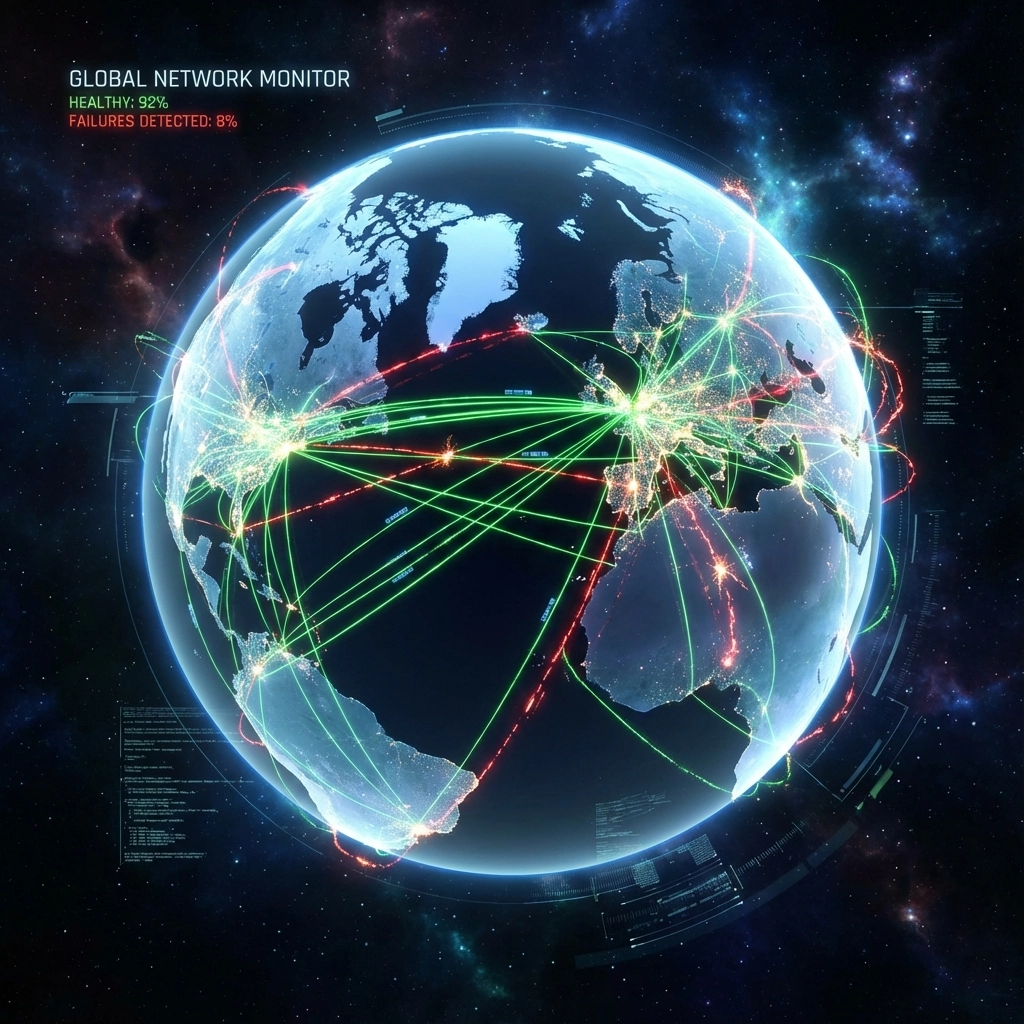
The expense management benefits extend beyond downtime prevention. Comprehensive monitoring provides detailed insights into resource utilisation, helping identify underused systems that could be decommissioned and overloaded systems that need upgrading. For large organisations managing thousands of devices across dozens of locations, these insights can drive significant cost savings.
Cloud cost optimisation becomes particularly critical for multinationals using multiple cloud providers. Remote monitoring systems can track usage patterns, identify idle resources, and recommend cost-saving measures like reserved instances or spot pricing strategies.
Getting Started: The Practical Steps
Implementing effective remote monitoring doesn't require a massive upfront investment, but it does require strategic thinking. Start by identifying your most critical systems: those whose failure would have the most severe business impact. These become your monitoring priorities.
Modern monitoring solutions integrate with virtually any infrastructure. Whether you're running traditional on-premises servers, cloud-based services, or hybrid environments, comprehensive monitoring is achievable. The key is selecting tools that provide unified visibility across your entire technology stack.
Don't overlook the human element. The most sophisticated monitoring system is worthless if alerts are ignored or misunderstood. Establish clear escalation procedures, ensure your team understands how to respond to different alert types, and regularly test your incident response procedures.
For property management companies: such as those utilising services like propertyinventoryclerks.co.uk: where property databases and tenant management systems are mission-critical, downtime can mean missed rental payments, inability to respond to tenant emergencies, and potential legal compliance issues. The cost of robust monitoring pales in comparison to the cost of explaining to tenants why their heating repair couldn't be scheduled due to system failures.
The Bottom Line
In 2026, asking whether you can afford remote monitoring is the wrong question. The right question is whether you can afford not to have it. With downtime costs reaching thousands of pounds per minute and the technology to prevent most outages readily available, remote monitoring isn't optional: it's fundamental business protection.
The companies thriving in today's digital landscape aren't necessarily those with the most advanced technology; they're the ones with the most reliable technology. Remote monitoring ensures your systems work when your business needs them most, protecting not just your immediate revenue but your long-term reputation and customer relationships.
Don't wait for a disaster to highlight the importance of proactive monitoring. The time to implement comprehensive remote monitoring is before you need it, not after you've learned its value the expensive way.
Ready to protect your business from the devastating costs of downtime? Book a free discovery call, let's Talk – https://itandconsultancy.co.uk/lets-talk/
Join The Discussion