
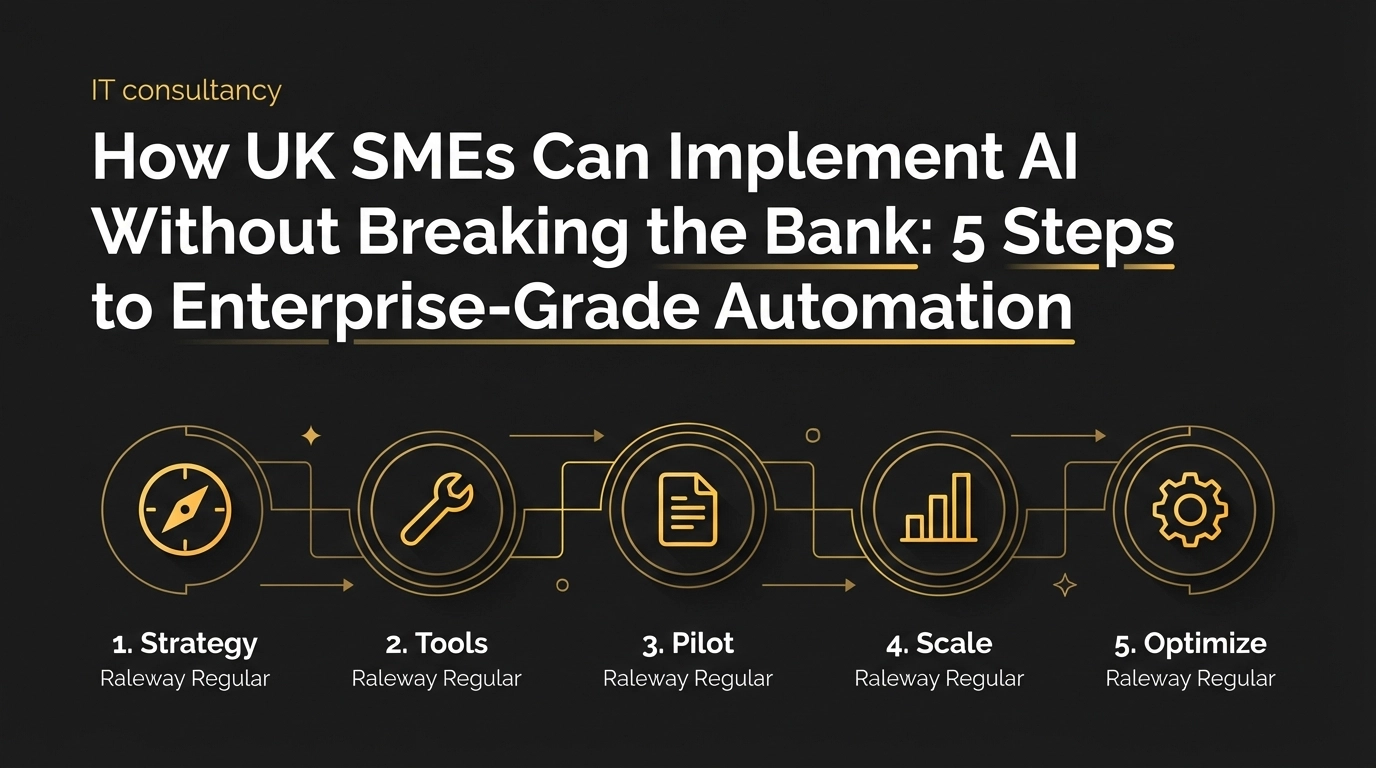
AI isn’t just for tech giants. UK SMEs are using it to streamline operations—no Silicon Valley budget or computer science degree required. The trick is a strategic, phased rollout that prizes practical value over flashy features.
Done well, AI returns about £3.70 for every £1 invested and cuts 20–40% from operating costs. Yet many SMEs still hesitate, assuming it demands hefty upfront spend and specialist skills they don’t have.
The reality: with the right approach, you can deliver enterprise‑grade automation in months, not years—without blowing the budget. Here’s the playbook.
Step 1: Budget Realistically for Total Cost of Ownership
The classic mistake is pricing the licence and forgetting everything else. That £100‑per‑month tool quickly becomes £3,000–£4,000 a year once integration, training, and ongoing support are in scope.
Realistic budgeting looks like this:
Micro businesses (1-10 staff): Allocate £2,000–£10,000 over 3–6 months for productivity tools like AI scheduling, basic chatbots, or document automation.
Small businesses (10-50 staff): Budget £15,000–£75,000 over 6–9 months for targeted implementations in 1–2 functions, such as customer service or inventory management.
Medium businesses (50-250 staff): Plan £50,000–£250,000 in year one for multi-function deployment across departments.
Golden rule: add 80% to your first estimate. That buffer covers integration, training, and inevitable scope creep. One UK fintech that did this achieved 320% returns over five years—because they planned for the whole journey.
Step 2: Start with High-Impact, Low-Complexity Use Cases
Skip the sweeping transformation. Target specific pain points with fast, measurable ROI. For most SMEs, customer service automation is the smartest first step.
A real example: a UK e‑commerce SME launched a chatbot that now resolves 70% of queries, saving over £50,000 a year. Build time: six weeks. Required expertise: minimal.
Other quick wins:
- Administrative automation: invoice processing, appointment scheduling, data entry
- Inventory forecasting: predict stock needs from history and trends
- Email marketing: personalised campaigns and automated follow‑ups
- Basic analytics: customer behaviour insights and sales pattern recognition
These projects typically deliver 20–45% cost savings in year one. Choose vendors on total cost of ownership, not headline price—factor in integration, training, and customisation.
Step 3: Leverage Affordable Off‑the‑Shelf Solutions First
You rarely need custom AI to get results. Off‑the‑shelf tools now pack enterprise‑grade capability at SME‑friendly prices.
Start with what you already use. Microsoft 365 Copilot and Google Workspace AI plug straight into existing workflows, delivering instant productivity without extra infrastructure.
For customer service, no‑code tools start around £20 per month; API‑driven options scale with usage. This lets you test value quickly without heavy upfront spend.
Prioritise fit over flash. A tool that costs more but integrates cleanly often beats a cheaper option that needs endless customisation.
Just like the efficient reporting systems used by property professionals at propertyinventoryclerks.co.uk, the right automation handles high‑volume work with impressive accuracy—freeing your team for higher‑value tasks.
Step 4: Invest Heavily in People and Process Change
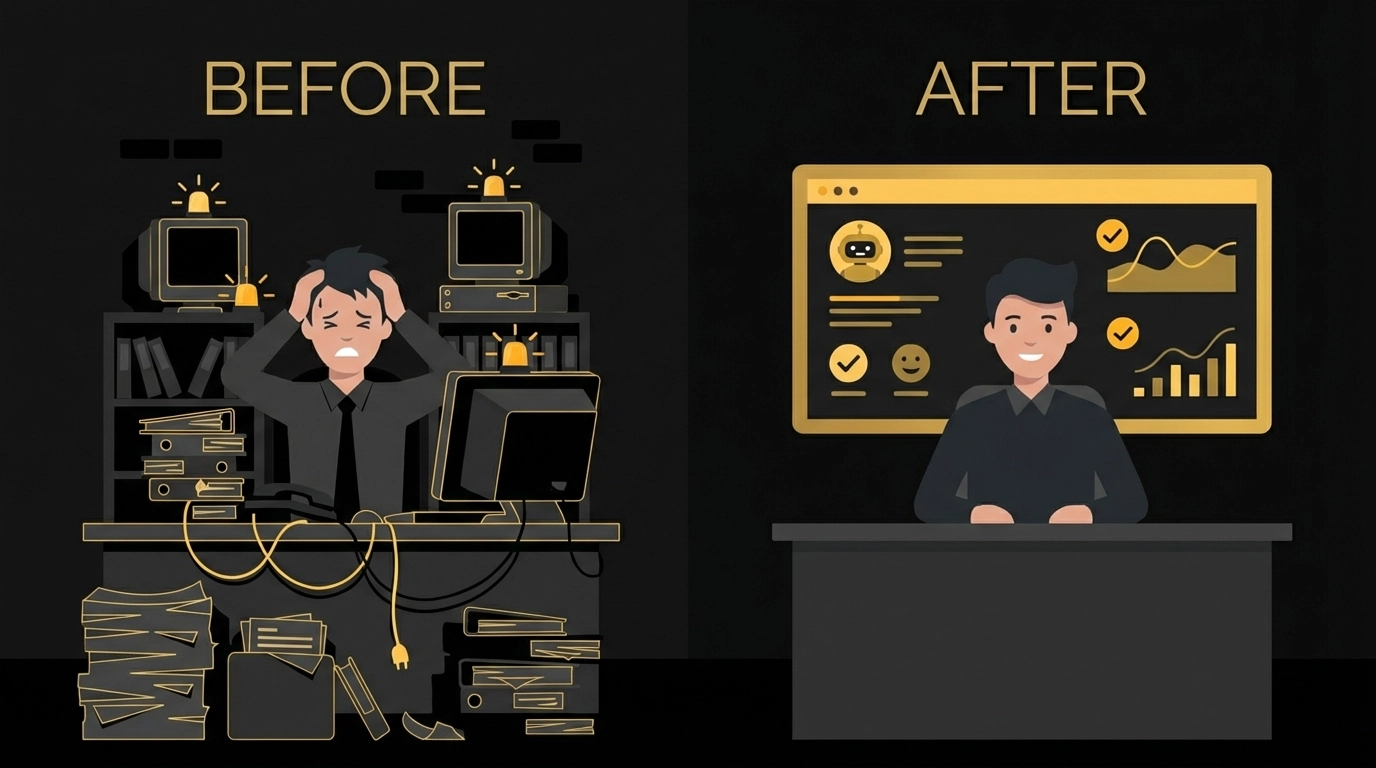
This is where many projects stumble: treating AI like a software purchase instead of an organisational change. The human side is the most underestimated cost—and the biggest success factor.
Winning teams budget for training, communication, and hands‑on support during the transition. The SMEs that succeed plan for the full cost of change and invest in people as much as platforms.
Include:
- Change management: show how AI elevates roles rather than replaces them
- Structured training: technical skills and process adaptation
- Ongoing support: troubleshooting and optimisation in the first 90 days
- Clear comms: progress updates and space for feedback
AI works best as augmentation, not replacement. Your team’s judgment plus AI’s speed is a competitive advantage pure automation can’t match.
Step 5: Plan for Scaling and Ongoing Optimisation
AI isn’t a one‑and‑done project—it’s a programme. By year three, scaling and maintenance often outweigh year‑one build, with 60% of total costs tied to training, support, and growth.
As systems multiply, integration can lift annual operating costs by 25–40%. The right monitoring and analytics—often £2,000–£5,000 a year—can boost ROI by 30–50% through actionable insights.
Scale in phases:
- Phase 1 (Months 1–6): Single‑function implementation with proof‑of‑value
- Phase 2 (Months 7–12): Expand to complementary functions, tighten integrations
- Phase 3 (Year 2+): Cross‑department deployment with advanced analytics
Typical outcomes: 27–133% productivity gains and payback in 4–12 months. Smart partnerships and selective offshoring can reduce costs by 40–60%; one UK SME cut five‑year spend from £320,000 to £144,000 with a thoughtful offshore model.

The Road Ahead
AI success isn’t about the biggest budget—it’s about disciplined execution aligned to business goals. Start small, think big, scale deliberately.
The leaders didn’t launch grand programmes on day one. They solved one valuable problem, proved the impact, and built from there.
Begin with your biggest operational friction, pick tools that fit, invest in your people, and plan for sustained optimisation. The real question isn’t whether you can afford AI—it's whether you can afford to let competitors pull ahead.
Ready to explore how AI can transform your business operations? Book a free discovery call, let's Talk and discover which AI solutions align with your business goals and budget.
Book a free discovery call, let's Talk – https://itandconsultancy.co.uk/lets-talk/
Join The Discussion