

If your business is still running on systems from the early 2000s, you're not just behind the times—you’re quietly leaking value. Technical debt isn’t jargon; it’s the silent saboteur slowing decisions, inflating costs, and tying up teams across the UK—one legacy dependency at a time.
What Exactly Is Technical Debt?
Think of technical debt like the maintenance on your car. You can ignore that strange noise coming from the engine for months, but eventually, it'll cost you far more than a simple service would have. Technical debt is the accumulated cost of choosing quick fixes over proper, long-term solutions in your technology infrastructure.
Every time your team patches a system rather than properly upgrading it, every workaround implemented to keep legacy software limping along, every "temporary" solution that's been in place for three years, that's technical debt piling up. And just like financial debt, it compounds with interest.
The Shocking Reality: How Technical Debt Is Draining Your Resources
The numbers don’t lie. Research shows that engineers spend approximately 33% of their time dealing with technical debt. That means one-third of your IT budget is going towards maintaining workarounds instead of moving the business forward.
Even more concerning: 60% of CIOs report that their organisation's technical debt has risen significantly over the past three years. This isn’t a slow drift; it’s a wave of obsolescence that crowds out progress.
And nearly 70% of organisations view technical debt as having a high impact on their ability to innovate. While your competitors pilot new capabilities and streamlined processes, legacy constraints keep you moving in slow motion.
The Hidden Costs That Are Crippling Your Business
Productivity Paralysis
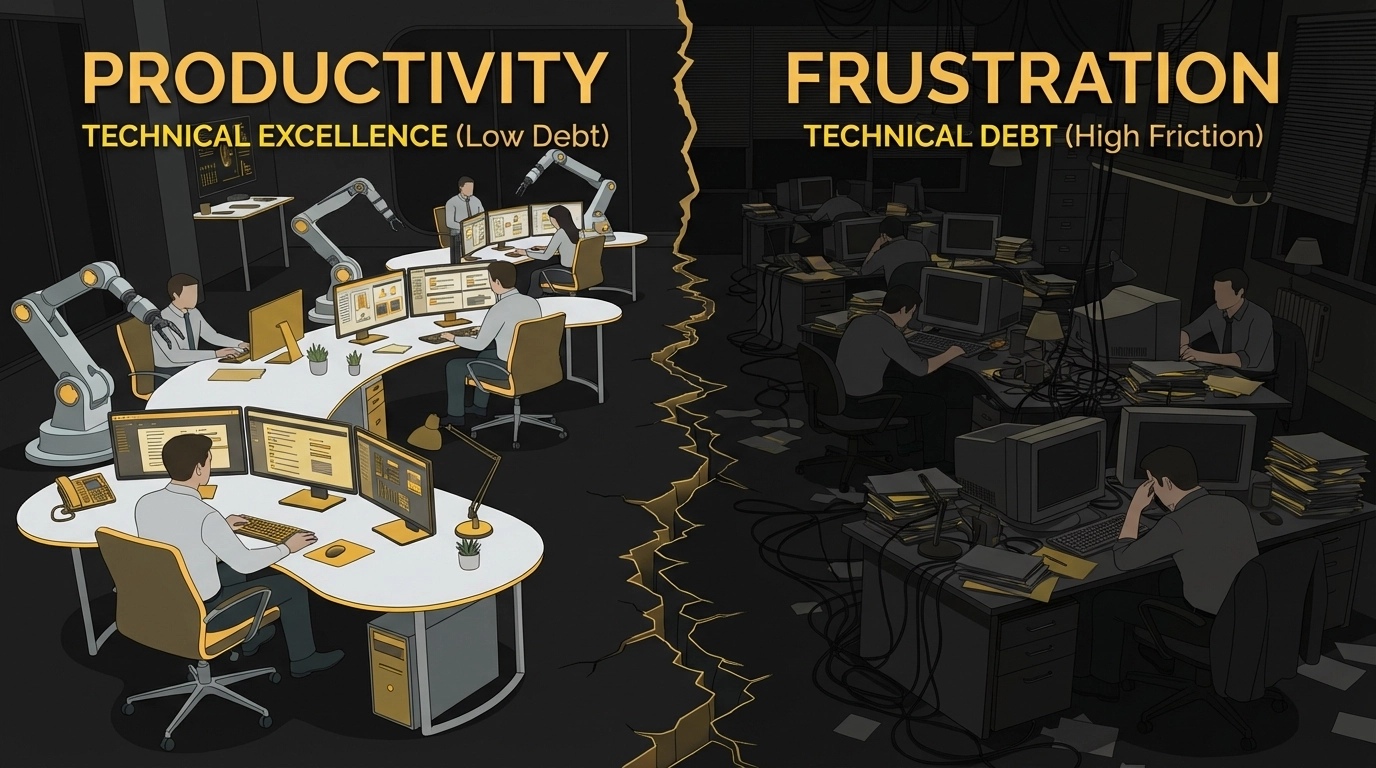
Your team isn't lazy, they're fighting against systems that actively work against them. When every simple task requires navigating through layers of outdated interfaces, waiting for slow responses, and working around system limitations, productivity plummets. What should take minutes stretches into hours, and what should take hours becomes day-long ordeals.
The Innovation Graveyard
Technical debt doesn't just slow you down; it actively prevents growth. Want to integrate that brilliant new customer management system? Sorry, your legacy infrastructure won't support it. Planning to expand into e-commerce? Your current systems can't handle the load. Technical debt turns every opportunity into an impossibility.
Financial Haemorrhaging
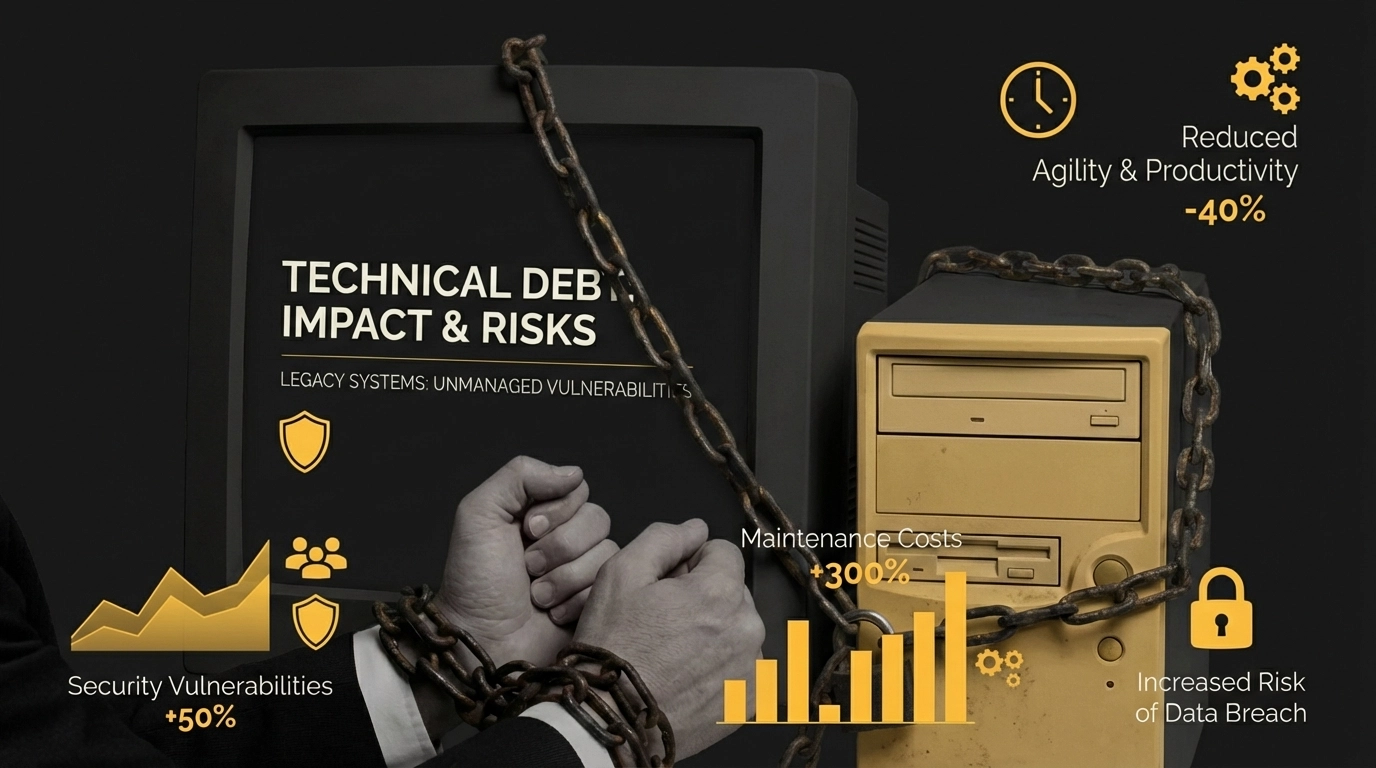
The maintenance costs alone are eye-watering. Legacy systems require specialist knowledge that's becoming increasingly expensive and scarce. You're paying premium rates for consultants who remember how systems worked in 2003, while your competitors are investing in modern, efficient solutions.
In extreme cases, businesses reach "technical bankruptcy": the point where systems are so outdated and interconnected that any change risks total system failure. The only solution becomes a complete rewrite, disrupting operations for months and consuming massive amounts of capital.
Security Nightmares
Legacy systems are security disasters waiting to happen. They're built on outdated security protocols, rarely receive security updates, and often contain vulnerabilities that are well-known to cybercriminals. Every day you delay modernisation is another day you're leaving your business exposed to potentially devastating security breaches.
Warning Signs Your Business Is Drowning in Technical Debt
- Simple changes take forever: What should be quick updates require extensive planning and multiple system modifications
- Frequent system crashes: Your systems are held together with digital duct tape and wishful thinking
- Staff complaints are constant: Your team spends more time fighting technology than using it productively
- Integration is impossible: New software can't communicate with your existing systems
- Maintenance costs are spiralling: You're spending more on keeping old systems alive than competitors spend on modern solutions
- Security updates are rare or impossible: Your systems are running on software that's no longer supported

How Managed IT Support Helps
A proactive managed IT partner is an always-on optimiser, not a break/fix hotline. Here’s how they remove legacy friction:
- Baseline and audit: complete asset inventory, dependency mapping, patch levels, licensing, and security posture. Score technical debt by risk, cost, and business impact.
- Stabilise and secure: standardise builds, apply updates, enforce backups and disaster recovery, and close high-risk vulnerabilities first.
- Simplify and modernise: retire or replace redundant tools, rationalise vendors, containerise or refactor where it pays, and introduce low-risk integrations and APIs.
- Plan and phase: build a roadmap with quick wins in 30/60/90-day horizons, sequence migrations to avoid downtime, and pilot before scale.
- Automate and observe: implement monitoring, alerting, and runbooks; automate patching, provisioning, and compliance checks; track MTTR, change success rate, and incident trends.
- Enable your team: deliver change management and training so new tooling sticks, supported by clear documentation and responsive support.
The outcome: fewer workarounds, faster delivery, and predictable costs—while your core systems move from legacy drag to modern leverage.
The Ultimate Modernisation Roadmap
Step 1: Conduct a Ruthless Technical Audit
Start by cataloguing every system, software package, and digital tool your business relies on. Document their age, maintenance requirements, security vulnerabilities, and integration capabilities. This isn't the time for sentiment: if it's not adding value, it needs to go.
Step 2: Prioritise by Business Impact
Not all technical debt is created equal. Focus first on systems that directly impact customer experience, revenue generation, or regulatory compliance. Create a risk assessment that weighs the cost of modernisation against the cost of system failure.
Step 3: Plan Your Migration Strategy
Successful modernisation isn't about ripping everything out and starting fresh: that's a recipe for disaster. Instead, plan a phased approach that maintains business continuity while systematically updating your infrastructure.
Consider hybrid solutions that allow old and new systems to coexist temporarily, giving you time to properly test and implement changes without disrupting daily operations.
Step 4: Invest in Cloud Infrastructure
Modern cloud solutions offer scalability, security, and cost-effectiveness that legacy on-premises systems simply can't match. Cloud migration isn't just about moving files to the internet: it's about transforming how your business operates.

Step 5: Automate Everything Possible
One of the biggest advantages of modern systems is their ability to automate routine tasks. From customer communications to inventory management, automation frees your team to focus on strategy and growth rather than administrative busy work.
Step 6: Train Your Team
The best technology in the world is worthless if your team doesn't know how to use it effectively. Budget for comprehensive training and ongoing support to ensure your investment delivers maximum returns.
The Transformation Payoff
Businesses that successfully modernise their systems typically see:
- 50-70% reduction in system maintenance costs within the first year
- Significant productivity increases as employees can focus on value-adding activities
- Enhanced security posture that protects against modern cyber threats
- Improved customer experience through faster, more reliable service delivery
- Competitive advantage through the ability to rapidly implement new technologies and processes
Modern systems are the backbone of efficient service delivery, whether in IT consultancy or professional property services like propertyinventoryclerks.co.uk. The businesses thriving today are those that recognised the danger of technical debt early and took decisive action to eliminate it.
Don't Let Technical Debt Kill Your Business
Technical debt isn't going to solve itself. Every day you delay modernisation, the problem gets worse and more expensive to fix. The businesses that will dominate the next decade are making these changes now, while their competitors are still hoping their legacy systems will somehow keep working indefinitely.
The question isn't whether you can afford to modernise: it's whether you can afford not to. Your competition certainly isn't waiting around to find out.
Ready to break free from the technical debt trap? Book a free discovery call, let's Talk – https://itandconsultancy.co.uk/lets-talk/
Join The Discussion