
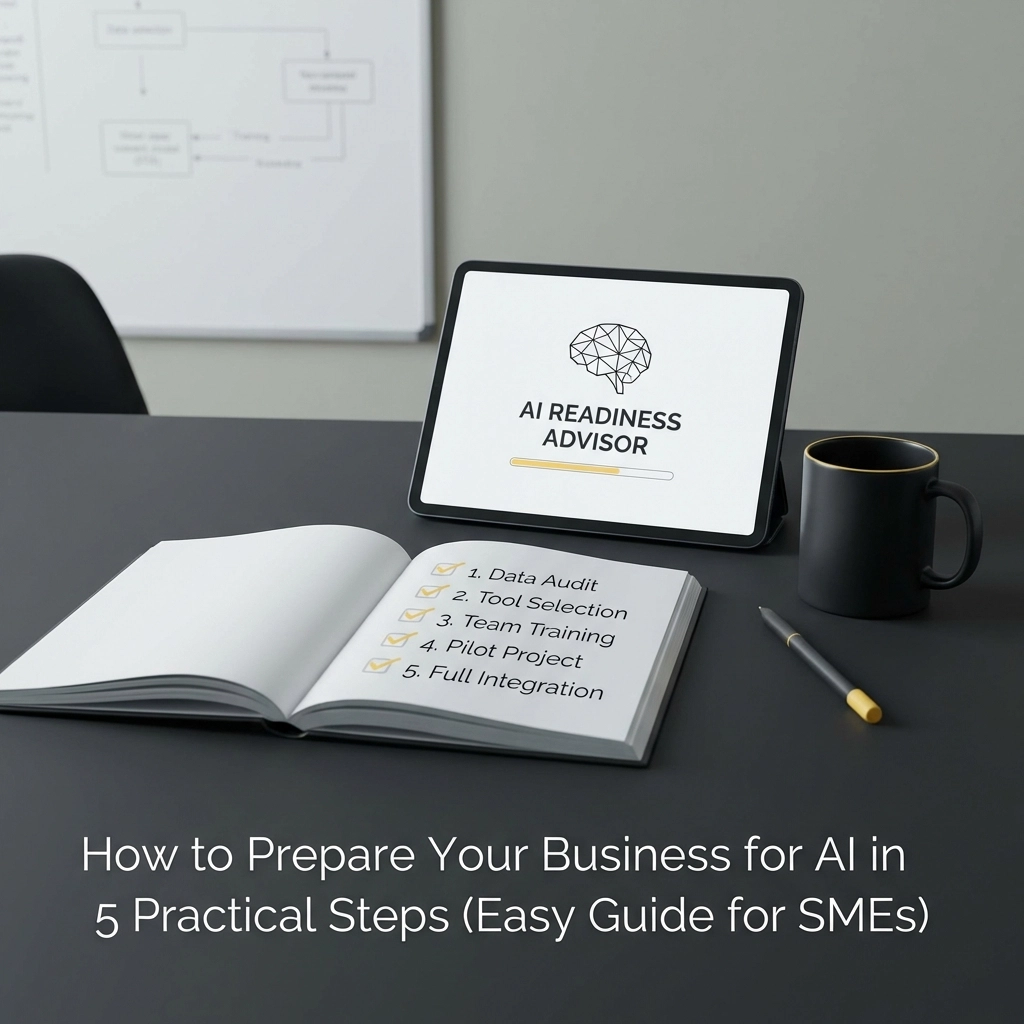
Artificial intelligence isn't just for tech giants and Fortune 500 companies anymore. In 2026, AI tools are more accessible, affordable, and practical than ever: making them a genuine game-changer for small and medium-sized enterprises (SMEs) across the UK.
But here's the thing: jumping into AI without a plan is a bit like buying expensive gym equipment and letting it gather dust in the garage. You need a strategy, the right tools, and a team that's ready to use them.
The good news? You don't need a massive budget or a team of data scientists to get started. This guide breaks down how to prepare your business for AI in five practical, no-nonsense steps. Whether you're running a professional services firm, a retail operation, or a manufacturing business, these tips will help you adopt AI in a way that actually makes sense for your organisation.
Let's get into it.
Step 1: Identify Business Areas That Can Benefit from AI
Before you start shopping for shiny new AI tools, take a step back and look at your business with fresh eyes. Where are the bottlenecks? What tasks eat up your team's time without adding much value? Where do you struggle with data or decision-making?
Common areas where AI can make a real difference for SMEs include:
- Customer service – Handling repetitive enquiries and freeing up staff for complex issues
- Marketing – Personalising campaigns and optimising ad spend
- Sales – Lead scoring and pipeline management
- Operations – Inventory forecasting and supply chain optimisation
- Administration – Automating data entry, scheduling, and document processing
The key here is to prioritise. Don't try to AI-ify everything at once. Pick one or two areas where you're genuinely struggling or where automation could deliver quick wins. This focused approach means you'll see results faster and avoid the overwhelm that comes with trying to do too much too soon.

Step 2: Choose the Right AI Tools
Once you've identified where AI can help, it's time to find the right tools for the job. The good news is that there's a huge range of AI-powered solutions designed specifically for SMEs: many of which are surprisingly affordable and user-friendly.
Here are some categories to consider:
Customer Relationship Management (CRM)
Modern CRM systems like HubSpot, Salesforce, and Zoho now come with built-in AI features that can predict customer behaviour, suggest next steps for sales reps, and automate follow-ups.
Chatbots and Virtual Assistants
AI-powered chatbots can handle customer enquiries 24/7, answer FAQs, and even process simple transactions. Tools like Intercom, Drift, and Tidio are popular choices for SMEs.
Marketing Automation
Platforms like Mailchimp, ActiveCampaign, and Jasper use AI to personalise email content, optimise send times, and even generate copy suggestions.
Analytics and Business Intelligence
Tools like Microsoft Power BI and Google Analytics now incorporate AI-driven insights that can help you spot trends, predict outcomes, and make smarter decisions.
Document and Process Automation
Solutions like Zapier, Make (formerly Integromat), and Microsoft Power Automate can connect your existing tools and automate repetitive workflows without any coding required.
When evaluating tools, consider your budget, technical capabilities, and how well each solution integrates with your existing systems. And don't be afraid to take advantage of free trials: most AI platforms offer them, so you can test before you commit.

Step 3: Train Your Team and Foster AI Adoption
Here's a truth bomb: the best AI tools in the world are useless if your team doesn't use them properly. Employee buy-in is absolutely critical to successful AI adoption.
One of the biggest challenges businesses face is resistance to change. Some team members might worry that AI will replace their jobs. Others might feel intimidated by new technology. It's your job (or your managers' job) to address these concerns head-on.
Tips for smooth AI adoption:
Communicate the "why" – Explain how AI will make their jobs easier, not redundant. Focus on how it can eliminate boring, repetitive tasks and free up time for more interesting, higher-value work.
Provide hands-on training – Don't just send a link to a help article and hope for the best. Invest in proper training sessions where employees can learn by doing.
Start with enthusiasts – Identify team members who are naturally curious about technology and get them on board first. They can become internal champions who help bring others along.
Create a feedback loop – Encourage employees to share what's working and what isn't. This helps you refine your approach and shows the team that their input matters.
Celebrate wins – When AI helps close a deal faster, reduces customer wait times, or saves hours of admin work, make sure everyone knows about it.
Building a culture of innovation takes time, but it's worth the effort. The businesses that thrive with AI are the ones where employees feel confident and empowered to use these tools.

Step 4: Start Small and Scale Gradually
This might be the most important piece of advice in this entire guide: don't try to boil the ocean.
It's tempting to go all-in on AI transformation, but a cautious, phased approach is almost always smarter: especially for SMEs with limited resources.
Here's a practical framework:
Pilot first – Start with a small-scale project in one department or team. For example, you might test an AI chatbot on your website for three months before rolling it out to other channels.
Measure everything – Define clear success metrics before you begin. Are you trying to reduce response times? Increase conversion rates? Save staff hours? Track the numbers so you can objectively assess whether the AI tool is delivering value.
Iterate and improve – Use what you learn from your pilot to refine your approach. Maybe the chatbot needs better training data, or perhaps your team needs more support. Make adjustments before scaling up.
Expand strategically – Once you've proven the concept, gradually roll out AI to other areas of the business. Each new implementation should build on the lessons learned from previous ones.
This approach minimises risk, keeps costs manageable, and gives your team time to adapt. It's not as exciting as a dramatic overnight transformation, but it's far more likely to succeed.
Step 5: Ensure Data Security and Ethical AI Use
AI systems are hungry for data: and that means data security and privacy should be front of mind throughout your AI journey.
As an SME, you're still bound by data protection regulations like GDPR. Any AI tools you implement must handle personal data responsibly and compliantly. Here's what to keep in mind:
Security considerations:
- Vet your vendors – Before signing up for any AI platform, check their security credentials. Look for certifications like ISO 27001 and ask about their data handling practices.
- Control access – Limit who can access AI tools and the data they process. Use role-based permissions where possible.
- Monitor continuously – Set up alerts and regular audits to catch any unusual activity or potential breaches early.
- Keep software updated – Ensure all AI tools and connected systems are running the latest security patches.
Ethical considerations:
- Be transparent – If you're using AI chatbots, let customers know they're talking to a bot, not a human.
- Avoid bias – AI systems can inherit biases from their training data. Be aware of this risk and review outputs regularly for fairness.
- Maintain human oversight – AI should support decision-making, not replace human judgment entirely: especially for sensitive matters.
Building trust with your customers and employees requires showing that you take these responsibilities seriously. It's not just about compliance; it's about doing the right thing.

Ready to Take the Next Step?
Preparing your business for AI doesn't have to be overwhelming. By identifying the right opportunities, choosing practical tools, getting your team on board, starting small, and keeping security front of mind, you can harness the power of AI without the headaches.
And if you're not sure where to start or need help evaluating your options, that's where we come in. At Evestaff IT Support and Consultancy, we help SMEs across the UK navigate technology decisions: including AI adoption: with clear, jargon-free advice tailored to your business.
Book a free discovery call, let's Talk – https://itandconsultancy.co.uk/lets-talk/
Join The Discussion